Electric, Plumbing, Heating/Cooling and Insulation Update

Plenty of work has taken place since the last progress pics post in October, though much of it has been with the mechanicals and infrastructure of the house. I’ve been doing plenty of reading to learn about the various options at this stage. It’s a fine balance between picking the best option available, finding the best installer, getting the best price and looking for the smartest long-term benefits.

The electric rough-in has been completed, along with a new panel and service. There have been several meetings with the HVAC installer and 75% of the ducts have been installed along with one of the units. The plumbing and natural gas rough-in has been completed. Everything behind the walls will be completed over the next few weeks, followed by all the necessary inspections, a spray foam insulation installation, and lastly drywall! Then the real fun begins.


Electric

IMG_1230

A brand new electric panel merged the 2 old ones together in the basement. Peace. Of. Mind. The alarm panel, LAN connections and phone lines will all converge on this wall in the basement as well.
 

IMG_1264 IMG_1265 IMG_1266

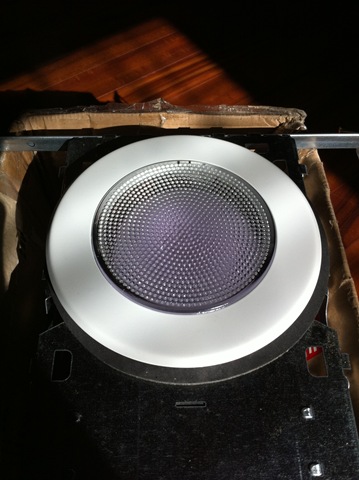
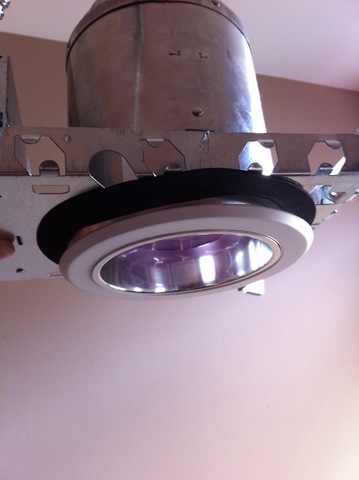
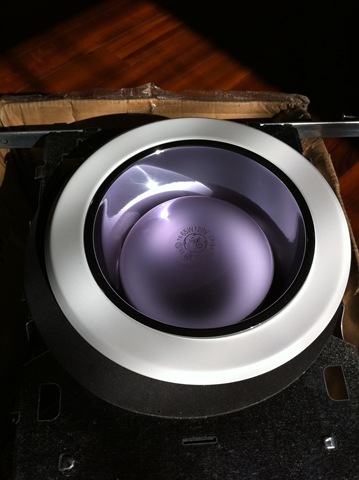
5” Clear Specular Reflector trim (l, c); 5” Fresnel Waterproof Shower trim (r)

The recessed can dilemma. This really wasn’t a dilemma that I had – it was more everyone else’s since just about everyone had opinions of what high-hats to use: “use 3 inch, you don’t need that much light; 4 inch are the best because the holes are small; 5 inch are too big; stay away from 6 inch” was all I heard for a while. While I did sweat it for a few days, I knew that I really wanted recessed cans throughout the house for general lighting and they would be in addition to table lamps, floor lamps, under-counter lighting, chandeliers, etc. I learned a good rule of thumb: 5” cans need 5’ between themselves and 4” cans need 4’ between themselves. I wanted to avoid the “runway” feeling of too many holes in the ceiling, yet wanted good light. The more I read about recessed can sizes, the more I knew that I wanted to go with 5” cans.

So, I chose 5” line voltage recessed airtight fixtures. Why airtight? So the conditioned air didn’t leak into the joist space and go wasted. Why line voltage? I’m a huge fan of GE Reveal light bulbs (or lamps as they’re called in the industry). I like the flood’s light angle. I can move to LED PAR30 or R30 light bulbs with these fixtures once the price, color and brightness are perfect. There’s a highly-rated HALCO warm white LED and natural white LED that I have my eyes on over at EnvironmentalLights.com – the brightness is almost on par (no pun intended!) with an incandescent bulb. I may get them in one room of the house to give them a test run, but at over $100 for each bulb this can wait.

As for the trim, I’m going with the 5” Clear Specular Reflector trim throughout, as you can see in the first 2 pictures above. The last picture is the enclosed 5” Fresnel Waterproof Shower trim for the shower and tub areas. There’s also a 5” Gimbal Ring trim that allows you to angle the light and that’s perfect for the stairs and over the fireplace mantel in the media room.

Next mission, light switches and dimmers. I’m a fan of Lutron’s Maestro Digital Fade dimmers and Lutron’s Diva switches—there’s even a Lutron Maestro Timer switch for bathroom exhaust fans that turns it off after a predetermined time. Perfect. Another reason that I love Lutron… the wallplates—not a screw in sight. If only Control4’s home automation system was compatible with Maestro’s digital fade switches. (Google it)

Oh, the alarm system’s rough-in installation is complete too. All access points are armed with a few motion and glass breaks for good measure. Centrally monitored via cellular signal. Bye, bye dedicated landline.


Plumbing
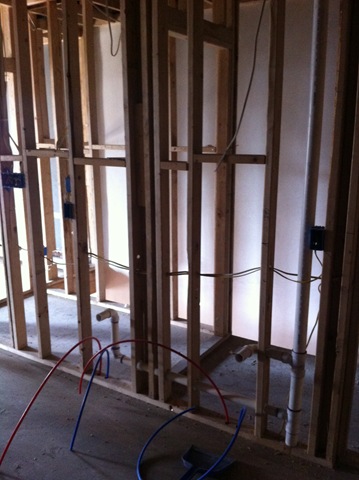
IMG_1261 IMG_1260

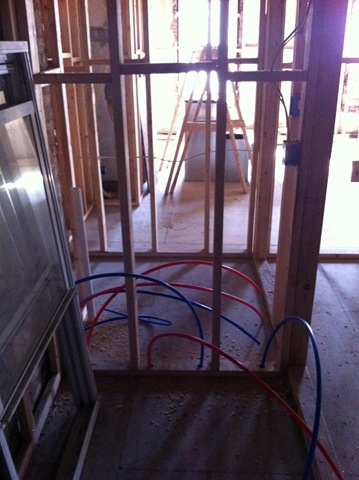
The red and blue items in the pictures above are plumbing supply lines called cross-linked polyethylene, commonly abbreviated PEX.

Here’s Wikipedia’s explanation of PEX:

Cross-linked polyethylene is a form of polyethylene with cross-links. It is formed into tubing, and is used predominantly in radiant heating systems, domestic water piping and insulation for high tension (high voltage) electrical cables. Recently, it has become a viable alternative to polyvinyl chloride (PVC), chlorinated polyvinyl chloride (CPVC) or copper pipe for use as residential water pipes. PEX tubing ranges in size from imperial sizes of 1/4-inch to 4-inch, but 1/2-inch, 3/4-inch, and 1-inch are by far the most widely used.

PEX is a very flexible product. It can be bent behind studs in a wall and is installed in a straight-shot from the water supply in the basement to each fixture without cutting or splicing. Less joints equal less potential points of failure and a quicker path for the water to travel without friction.
IMG_1228

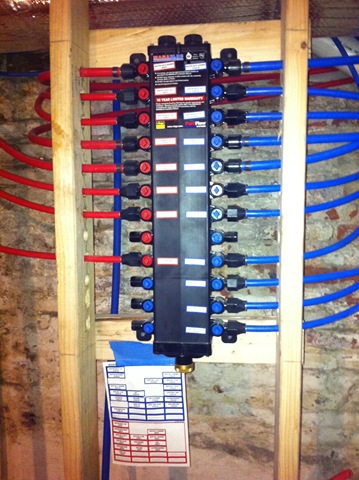
Each PEX line connects to a manifold in the basement which then connects to the main hot and cold supply. The best purpose of the manifold is to balance water usage throughout the house – you won’t get burned in a shower if someone flushes a toilet since each water outlet has its own PEX supply line. In addition, the smaller lines can save energy because you only run a fraction of the water through the line while waiting for hot water at a fixture. Another benefit of the manifold is that each hot and cold supply line can be turned off independently. This is very helpful when you need to change or repair a fixture.


Heating and Cooling

IMG_1250 IMG_1238

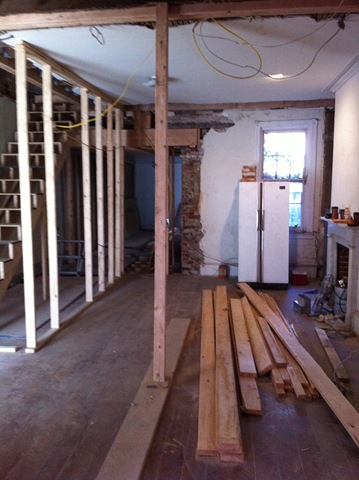
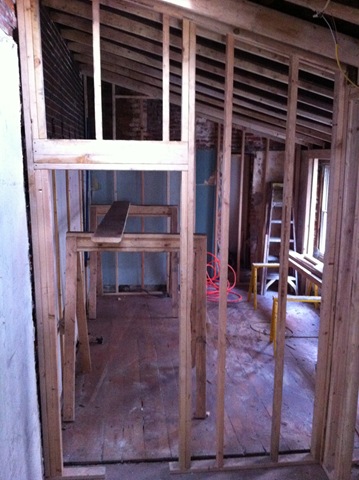
An ideal (l) and less than ideal (r) duct location.

My general contractor connected me with a terrific heating and cooling contractor. A little over a month ago, we first met to walk through the house and explain how the house will be lived in. There will be 2 separate heating/cooling systems to service the house. The basement unit will take care of the first and second floors—100 MBH and 95% efficient gas furnace for heating and 4-tons of air conditioning. A rooftop combination unit will take care of the third floor—40 MBH of heating and 1.5 tons of air conditioning. (One MBH is equivalent to 1,000 BTU’s per hour.)

We met again after the HVAC rough layout was completed on paper and made some changes to the duct, supply and return register placement mostly for aesthetic reasons. A third walkthrough for some final adjustments in the field and the first floor and second floor ducts are now complete. There are a couple of less than ideal duct locations, but it’s the price you pay to have a comfortable home throughout. Once the weather clears up and the snow on the roof has melted, he’ll be able to install the rooftop unit and third floor ductwork.


Insulation

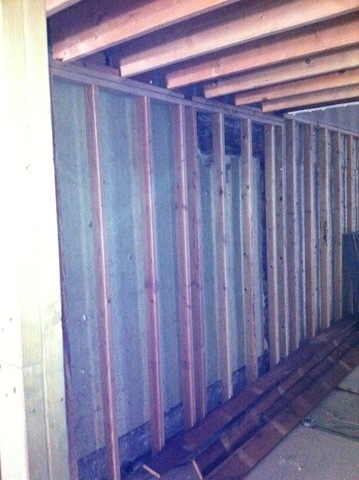
I want the house to feel comfortable year-round and insulation is one of the best ways to accomplish that. Properly insulating the house is so much easier now that all of the exterior walls are exposed down to the studs. My contractor mentioned closed-cell spray foam insulation after he had it done on another job as an alternative to fiberglass. I’ve been reading all about it since that time and the benefits appeal to me despite the additional initial cost—you can expect to recoup the additional initial cost through lower monthly heating and cooling bills over time. Closed-cell spray foam insulation is professionally installed and the R-Value is measured by the number of inches sprayed directly onto exterior walls between studs and roof rafters. Fiberglass has an R-value of 3.2 per inch while closed-cell spray foam has an R-value of 7.0 per inch. This vendor uses a spray foam insulation called HEATLOK SOY. Here’s a little write up from their technical data sheet.

HEATLOK SOY® is two component spray applied rigid polyurethane foam, green in color, having a nominal density 2lbs/ft³. This spray foam has been specially formulated to meet the intent of the International Code Council (ICC) building codes and is used primarily as a vapor barrier, air barrier and thermal insulation on above and below grade interior and exterior applications. Complies with FEMA requirements as a Class 4 insulation.
HEATLOK SOY® is environmentally‐friendly foam developed from recycled plastic materials and renewable soy oils, while the blowing agent is the HFC 245fa. Certified Insulation Material approved by California Department of Consumer Affairs. GREENGUARD and GREENGUARD Children and Schools certified.

In simpler words, this is an environmentally-friendly spray foam that provides a continuous barrier along the exterior of the house which prevents air from escaping, seals moisture out and provides additional structural stability. They claim up to a 60% reduction in heating and cooling bills but I’ll be happy with less than that. Another way to ensure that the house feels comfortable year-round is good windows. But that’s enough info for a whole other post.

Posted in Alarm, Electric, Heating/Cooling, Insulation, Plumbing | 1 Comment

Week 12 Progress Pics–Staircase Edition

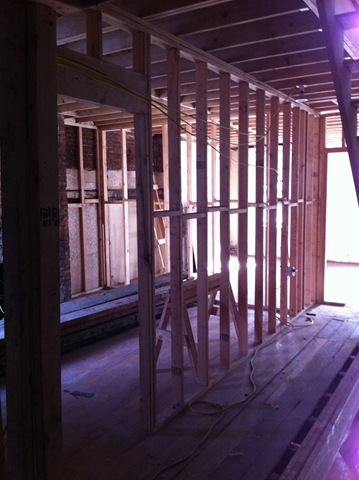
I received news that the temporary stairs were installed! Naturally, I stopped by the house to see the progress. And this time, I took plenty of pictures of the 2nd and 3rd floors. Demolition is done. Framing is almost complete. Electrical, plumbing and HVAC rough-in begins. It’s starting to look like home.

First Floor

IMG_0853 IMG_0854 IMG_0839

Entrance from the vestibule. The new location of the staircase to the second floor. Vertical wood braces are temporary as the structure is secured.


IMG_0842 IMG_0843

From the living room looking into the dining room (with the kitchen in background). Vertical wood braces are temporary.


IMG_0856

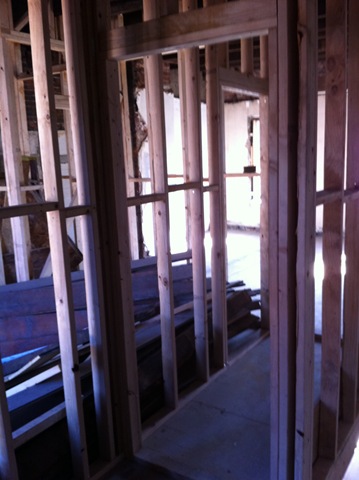
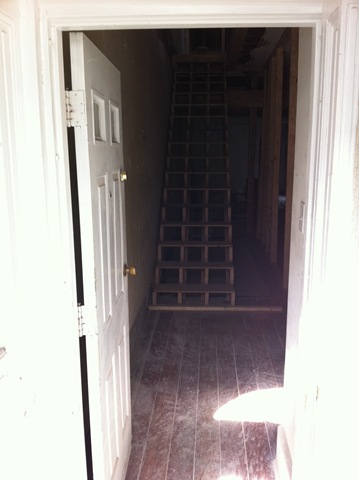
Looking through the hallway from the dining room towards the kitchen. Hallway will contain the powder room to the right and coat closet along with basement access to the left. Eat-in kitchen will be past the hallway. Door to garage in the distant right.
 

IMG_0841

In the kitchen and looking back into the dining room and living room. Temporary braces make the pass-through seem smaller.


Second Floor 

IMG_0821 IMG_0817 IMG_0857

Stairs coming up to the second floor hallway, followed by 2 steps to the lower portion of the second floor, which leads into the back bedroom and full bathroom (not pictured). The bathroom has completely new floor joists and an interior wall – they were necessary when the old staircase was eliminated.


IMG_0858 IMG_0860 IMG_0859

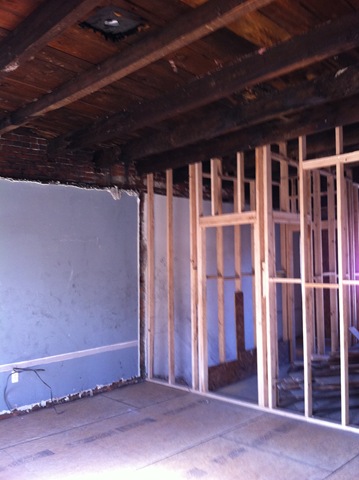
The back bedroom regained ceiling height by removing the existing low ceiling and installing the new ceiling to the roof’s pitch. This room was originally planned to be a guest bedroom but may become the media room.


IMG_0862 IMG_0871 IMG_0869

The middle bedroom has been framed out and the interior wall with the door has been moved in to accommodate the new staircase and hallway (now each 3 feet to comply with code). This room is perfect as a study.


IMG_0863 IMG_0864

From the hallway, walk past the middle bedroom and to the front bedroom. The entrance needed to be bumped-in to accommodate the new staircase to the third floor – it flipped direction and became less angled.


IMG_0865 IMG_0824 IMG_0867

The front bedroom was originally planned as the media room but might become the guest bedroom. It faces south and gets plenty of sunlight all afternoon. It’s also across the street from a garden park so there are no neighbors across the way.


Third Floor 

IMG_0826 IMG_0874 IMG_0827

Head up the new stairs to a (now boarded) door out to the deck. A hallway leads to an entrance for the master bathroom to the left and bedroom straight ahead .


IMG_0876 IMG_0877 IMG_0878

Vanity on inside wall, toilet and shower stall to the right and laundry room straight ahead.


IMG_0832 IMG_0833

Entrance of the master bedroom from the hallway. Side wall for bed.


IMG_0831 IMG_0834 IMG_0835

Entrance of the master bedroom again and side wall for the closet space. We regained ceiling height by removing the existing ceiling to expose the ceiling joists (treatment TBD).

Posted in "Before", Demolition, Dining Room, Entrance, Floor Layout, Framing, Kitchen, Master Bathroom, Pictures, Powder Room, Staircase, Vestibule | Leave a comment

GC Walkthrough

Joe and I had an appointment to meet the general contractor this evening for a quick walkthrough to answer a few questions that have come up along the way. While we both had our iPhones and the camera, we didn’t take any pics—we were too distracted from the sheer excitement of seeing the space framed out…

First Floor: The new staircase opening to the 2nd floor has been framed out and floor joists between 1st and 2nd floor have been secured and are solid. The powder Room is framed out. Lots and lots of structural work to brace the house since a load-bearing wall was removed. We walked through the recent updates to the kitchen plans—remove the sliding patio door, shrink the opening to a standard door and allow for more countertop area and a larger window to let more light in.

Second Floor: Wow. I haven’t been up to the 2nd and 3rd floors in a while since there haven’t been stairs. And while there are still no stairs, I braved a short ladder and climbed on up (fearfully) to the 2nd floor 10 feet up. I know it doesn’t sound like much, but it was. All interior walls and almost all exterior walls are completely new and framed out. The new staircase opening to the 3rd floor has been opened up and framed out. The bathroom now has a floor again since it had to go with the load-bearing wall removal. The lower landing of the second floor has been built and the awkward elevation of the bedroom, landing and bathroom is no longer awkward—all on the same level (in the original layout, you walked up the stairs which ended in the middle of the bathroom entrance and took a step up into the bathroom… to get out of the bathroom, you took a step back down from the bathroom carefully to ensure you weren’t on a step, walked the landing and then back up a step to the back bedroom). The back bedroom has a 7’8” ceiling height but we discovered that there’s a vaulted roofline above, so we’ll raise the ceiling to match the roofline angle opening up the room much more. This changes the character of this room so much that we may consider this as the new media room and move the guest bedroom to the front of the house.

Third Floor: Again, wow. The back-half of the floor joists have been completely replaced due to the expansion of the staircase opening. (The old staircase width was 30” but code is now 36” and since the stairs moved, they need to comply to code… and it looks better. All hallways are now also 36” wide.) The front-half of the floor was lacking proper support when originally built so it will be replaced as well.

All in all, a very productive walkthrough. It’s great to see the house take shape into the vision that’s been laid out on paper with the architect. Based on the extensive demolition and framing, we’re looking at another 4 months or so of work before move in—not too bad for a place we’ll call home for a while. Off to continue finding inspiration…

Posted in "Before", Demolition, Floor Layout, Framing, General Contractor, Kitchen, Powder Room, Staircase | Leave a comment

A Little Visual Inspiration

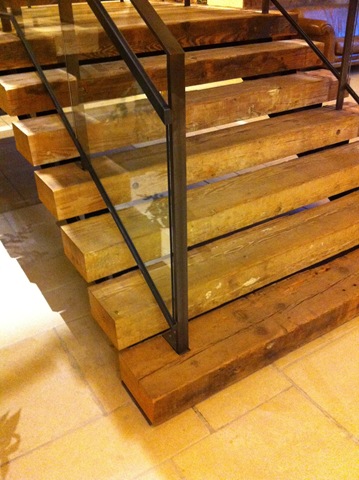
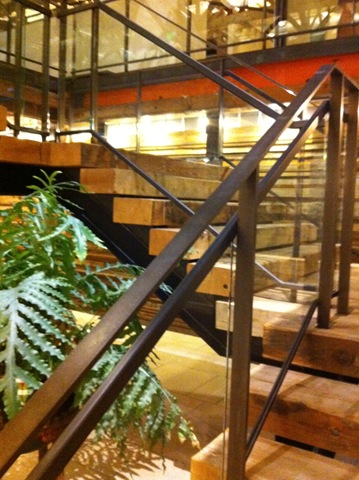
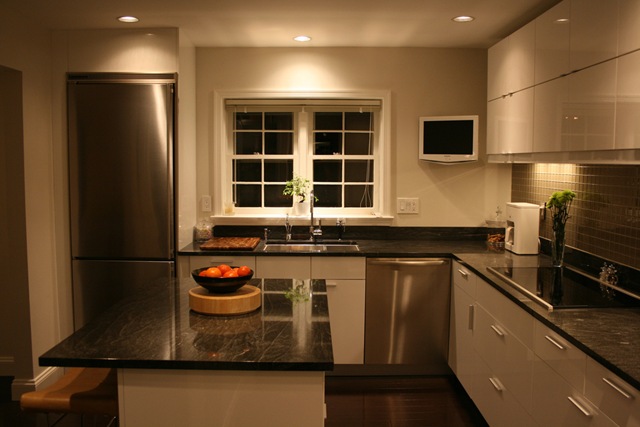
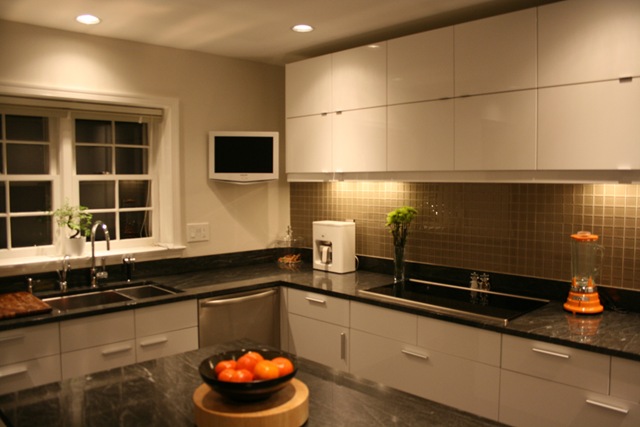
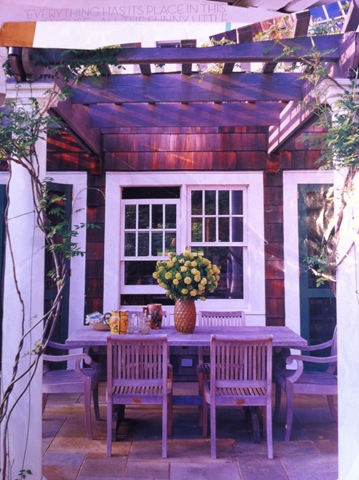
We’ve been surfing the web, tearing out pages from magazines and looking everywhere around us for inspiration. Here are some starting points for the various rooms. Remodelista.com and Houzz.com rank up there. Do you have any inspiration to share? If so, send it over.

Vestibule Wallpaper and Entrance

wallpaper vestibule photo Kriselkeeper blogspot bench

Staircase

noble stairs 05-refresh-rooms-color

Mobile Photo Aug 22, 2010 6 18 06 PM Mobile Photo Sep 17, 2010 7 21 09 PM Mobile Photo Sep 17, 2010 7 21 54 PM

Mobile Photo Sep 17, 2010 7 22 37 PM The-Thiang-Residence-Staircase-Design-392x588

Living Room and Dining Room Fireplaces

eclectic living room Michelle Edwards Connecting both on first floor Aug 14, 2010 11 44 05 AM

fireplace dinesen1

Hallway into Kitchen

modern living room by Rodriguez Studio Architecture PC

Kitchen

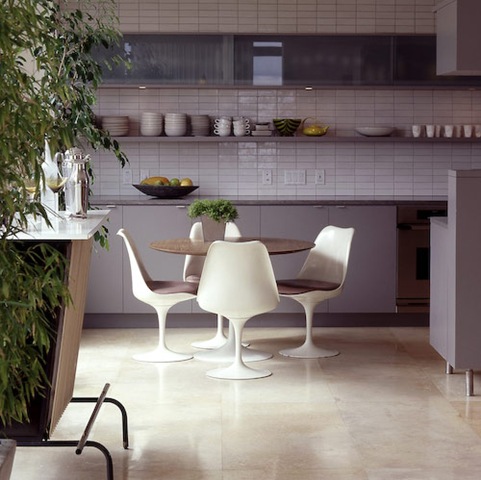
2161728362_757b6cbe67_b 2161728372_f1f522a1a4_b

2166293765_28cb219f78_b 2166293789_d70161186d_b

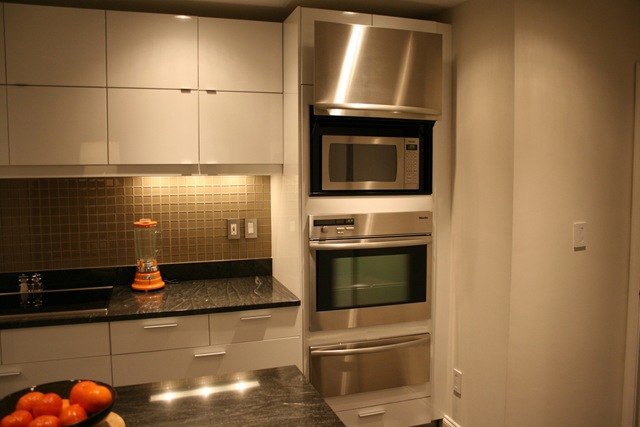
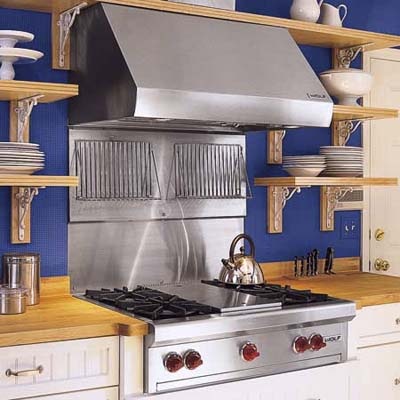
cooktop kitchen 3239660602_86ae77ebdf_o

Mobile Photo Aug 14, 2010 11 43 44 AM

Side Patio

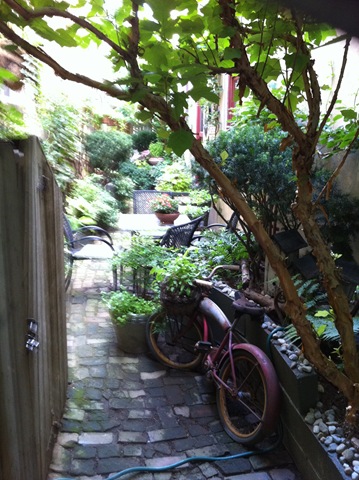
Patio photo 1 patio photo 2

Patio photo 3 Mobile Photo Aug 14, 2010 11 42 53 AM Mobile Photo Aug 14, 2010 11 43 05 AM

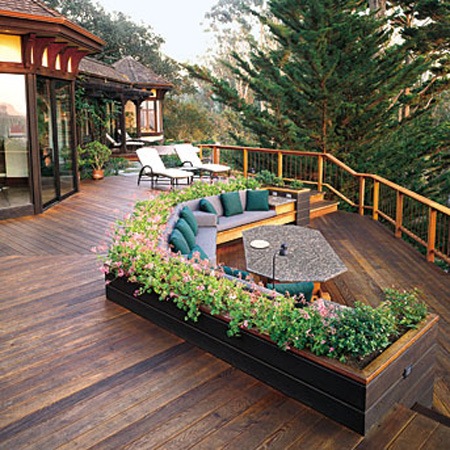
Deck

contemporary dining room by ORR Design Office Mobile Photo Aug 14, 2010 11 43 17 AM Large deck using planters to create separate spaces


Master Bathroom

 contemporary bathroom by lori sitz teacher contemporary bathroom by huntley & co contemporary bathroom by David Neiman Architects

modern bathroom by Blacksheep new shower in remodeled bathroom

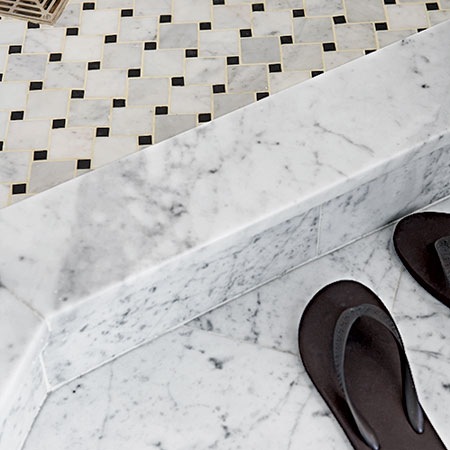
black-and-white tile and Carrara marble in remodeled bath vintagebath-02

photo

Posted in Deck, Entrance, Fireplace, Inspiration, Kitchen, Living Room, Master Bathroom, Patio, Staircase, Vestibule | Leave a comment

Week 10 Progress Pics

The joists are now framed out for the staircase opening. Supports are in place. The hallway into the kitchen is now open. I can see floor joists for the third floor—though still no easy access for me up to the other floors. Shaping up.

IMG_0724 IMG_0725 IMG_0726

Left and Center: Looking in from the vestibule entrance. New location of staircase. Right: Living room and Dining room to the right. Kitchen in the distance.

IMG_0727 IMG_0728 IMG_0729

Left: Standing at the doorway at the dining room looking back into the eat-in-kitchen. Center: Powder room up to where the window ends. Right: The left side of the kitchen (pantry, wall over, counter, and refrigerator).

Posted in "Before", Demolition, Floor Layout, Framing, Kitchen, Pictures, Powder Room, Staircase | Leave a comment